How a Zipper Works: Teeth, Slider and Tape
Learn how a zipper works by following its tape, interlocking rows, slider and end fittings, then use visible clues to choose a careful next step.
A coat zipper catches at the hem, then moves upwards as its two sides meet behind the slider. How a zipper works becomes clearer when you follow that movement: the tape supports the rows, the slider guides them, and the end fittings keep the slider on its route.
This arrangement appears on jackets, bags and many other items, though the bottom fittings differ. Knowing what each part does can help you tell a simple obstruction from damage that needs repair.
The tape keeps the rows aligned
The tape is the flexible fabric strip on each side of a zipper. Teeth or coils are attached along its inner edge, while its outer edge is usually sewn to a garment, bag or other item. The tape gives the fastening a base and connects it to the surrounding material.
As the item bends, the tape bends too. A fold or twist can bring the rows to the slider unevenly, even when the elements themselves look intact. Loose or puckered stitching can also pull one side out of line.
Before moving a resistant zipper, look at the tape where it meets the material. If it lies flat, inspect the rows and slider next.
Teeth and coils make the fastening line
The small parts attached to the tape are called teeth or elements. They may be separate metal or moulded-plastic pieces, or a continuous spiral coil. These forms differ in appearance, but both create rows that engage in sequence.
The slider guides the rows together as it moves in the closing direction and separates them when it moves the other way. The elements create the interlocking line; the tape and stitching support it.
A bent or missing element can interrupt that sequence. A coil pulled loose from the tape is a different visible fault, but it can also stop the rows meeting cleanly. Avoid repeatedly hauling the slider over either kind of damage.
The slider guides rather than fastens by itself
The slider is the moving body with channels that direct the two rows towards one another or apart. The pull tab gives your fingers a grip, but the slider’s channels guide the elements; the tab does not interlock them.
Fabric, a loose thread or twisted tape can obstruct the slider. Pause and inspect the area rather than pulling harder. If a thread is visible and can be eased away without stretching the fabric, clear it gently. If it is trapped or the slider remains jammed, stop and consider repair.
Use the pull tab to guide the slider, not to stretch the garment or bag.
End fittings show how the zipper is meant to open
Stops limit the slider’s travel. Top stops keep it from leaving the upper ends of the rows. At the bottom, a closed-end zipper has a fitting that joins the lower ends, while a separating zipper has a box and pin that let the two sides come apart.
On a separating zipper, the pin must enter the box before the slider closes the rows from the bottom. If it is only partly seated, the lower section may part as the slider rises. A closed-end zipper is designed to stay joined at the bottom, as on many pockets and bags.
Look at the bottom fitting before deciding that a part is missing.
What should you check when a zipper misbehaves?
Why does a zipper catch while closing?
A fold of lining, a loose thread, grit or misaligned tape may obstruct the slider or feed the rows unevenly. Inspect the catch point and clear only what you can reach without pulling hard.
Why do the rows open behind the slider?
The elements may not be engaging, or a row or slider may be worn or damaged. Look for a persistent gap or visible distortion; if gentle movement does not keep the rows joined, stop and seek repair.
Why will a separating zipper not close at the bottom?
The pin may not be fully seated in the box, or one of those fittings may be damaged. Align and insert the pin before moving the slider, and stop if it will not enter without force.
Can a closed-end zipper open at the bottom?
No, not by design. A separating zipper is made to come apart at its lower end, while a closed-end zipper remains joined there; the bottom fitting identifies which type you have.
A slow inspection can reveal where the sequence breaks
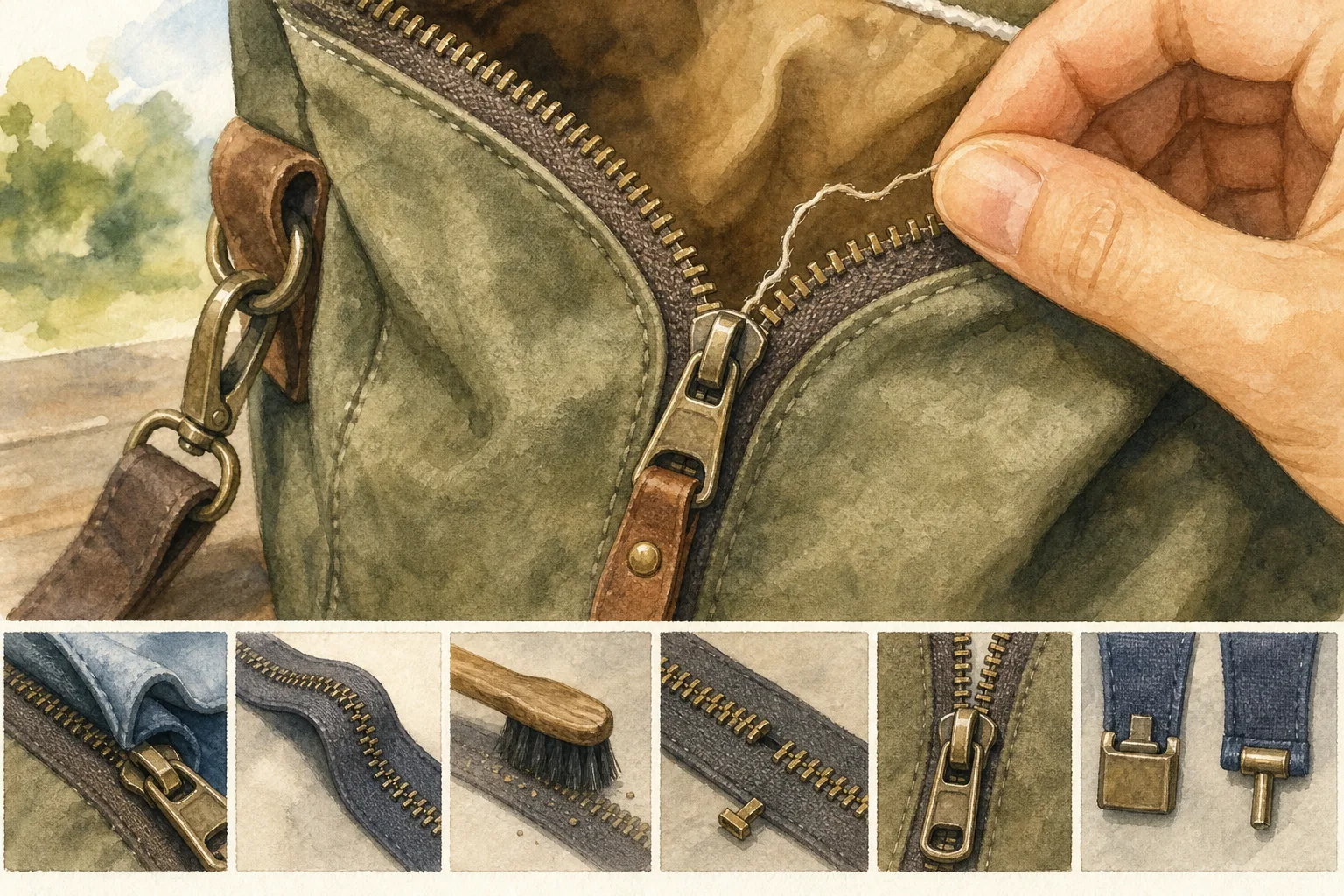
Imagine a canvas bag whose zipper catches halfway along. You stop and see a loose thread beside the slider. You ease the thread clear without yanking the tab, lay the tape flat, then move the slider gently through that section. The expected visible result is a smoother pass over the cleared spot. If the rows still part behind the slider, the thread was not the only fault, so you stop rather than force it.
As the slider moves, watch the section behind it. The rows should remain joined.
Match each visible clue to a careful next action
Inspect the zipper in good light and choose an action that fits what you can see:
- Observation: Fabric or lining is caught beside the slider. If: you can ease it free without pulling hard, clear it and move the slider gently; otherwise: stop to avoid tearing the fabric.
- Observation: The tape is folded or twisted. If: it lies flat when released, realign it before moving the slider; otherwise: if the seam holds it out of line, stop and seek repair.
- Observation: Loose grit is visible on the elements. If: it brushes away easily, use a soft, dry brush; otherwise: do not scrape it, and check the item’s care guidance or ask a repairer.
- Observation: An element is bent, missing or pulled away from the tape. If: the damage interrupts the row, stop using the zipper and arrange repair; otherwise: inspect for a separate obstruction before moving it gently.
- Observation: The slider moves but the rows open behind it. If: the gap remains during gentle movement, stop pulling and have the slider and rows assessed; otherwise: check whether a fold or obstruction was preventing alignment.
- Observation: A stop, box or pin is visibly damaged. If: it cannot hold or join the ends, keep the zipper unstrained and seek repair; otherwise: on a separating zipper, check that the pin is seated before closing.
Avoid applying oil, soap or other substances unless the item’s care guidance permits it. Residue can collect dirt or mark fabric. A repair professional can assess a damaged slider, broken stop or torn tape and advise whether the affected part can be replaced.
How a zipper works is easiest to remember as a guided meeting of two rows: the tape supports them, the slider brings them together or apart, and the end fittings define its route. When it resists, check the tape and visible obstruction first; if a row or fitting looks damaged, stopping early helps prevent further strain.